

NewsDetails
Spiral Steel Pipe Manufacturing Process: From Coil to Finished Pipe
author:Jinyuan time:2026-11-07 11:39:00 Click:182
Introduction
Spiral steel pipe is produced by forming a steel coil into a helix and welding the resulting seam along the full length of the pipe. The geometry allows a relatively narrow coil to produce a large diameter pipe, which is why spiral pipe dominates the large diameter segment of water transmission and gas pipeline projects. Understanding the process helps buyers judge which parameters actually control quality and which ones are only commercial details.
This document describes the production sequence used on a conventional spiral mill, the inspection points that matter, and the process variables that determine whether a delivered pipe will match the purchase specification.
Raw Material Selection and Incoming Inspection
Production starts with hot rolled coil. The steel grade is selected according to the design requirement, commonly an API 5L grade such as Grade B, X42, X52 or X60, or a structural grade when the pipe is used for piling or general conveyance. Coil width is chosen so that the finished diameter and wall thickness are produced at a practical forming angle, usually between 45 and 70 degrees.
Each coil is checked against its mill certificate for chemical composition, yield strength, tensile strength and elongation. Thickness is measured at several points across the width, because coil crown variation translates directly into wall thickness variation in the finished pipe. Coils with laminations, heavy scale or edge cracks are rejected before they enter the line, since defects of this type cannot be corrected downstream.
Coil Preparation and Edge Milling
The coil is uncoiled, levelled and trimmed square. Both edges are milled to a uniform bevel so that the weld groove geometry is repeatable from the first metre to the last. Edge milling removes the work-hardened sheared zone and any minor edge defect that would otherwise become a weld discontinuity.
After milling, the strip passes through a pre-bending station that curves the edges to the final radius. This step prevents the characteristic "peak" at the seam that appears when a flat strip is forced directly into a helix. Strip alignment is monitored continuously, because a lateral offset of a few millimetres is enough to produce weld offset and an out-of-tolerance joint.
Helical Forming on the Spiral Mill
Forming takes place between a set of rolls arranged so that the strip enters at an angle to the pipe axis. The forming angle, strip width and pipe diameter are linked by a simple geometric relationship, so a change of diameter requires a change of angle rather than a change of coil. The outer and inner edges of the strip meet at the welding position, where they are held by guide rolls.
During forming, the operator monitors diameter, ovality and seam gap. Excessive gap produces burn-through and a wide weld bead, while insufficient gap causes lack of fusion. Modern mills use laser tracking to keep the seam centred under the welding head, which reduces both weld defects and operator dependence.
Submerged Arc Welding of the Seam
Spiral pipe is normally welded with the submerged arc process, first on the inside of the seam and then on the outside. The two passes are offset so that they do not share the same centre line, which reduces the risk of a continuous through-thickness defect. Flux is recycled and screened, and welding parameters are recorded per pipe so that any deviation can be traced.
After welding, the seam is inspected visually and by ultrasonic or radiographic methods depending on the specification. Weld reinforcement is trimmed where a flush outside diameter is required, and the seam is marked so that it can be identified during installation and subsequent inspection.
Sizing, Straightening and End Finishing
The welded pipe passes through a sizing section that brings the diameter and ovality within the tolerance of the standard. Straightness is corrected by a series of rolls, and the pipe ends are cut square by plasma or mechanical cutting. Ends are then bevelled to the angle specified by the buyer, typically 30 degrees plus or minus 2.5 degrees for a standard butt weld preparation.
End dimensions receive particular attention because they control field fit-up. Circumference, bevel angle, root face and end squareness are measured on every pipe, and pipes outside tolerance are re-cut rather than shipped for site correction.
Testing and Inspection
Hydrostatic testing is the primary acceptance test for line pipe. Each pipe is filled, pressurised to the specified test pressure for a defined hold time, and examined for leakage and permanent deformation. Non-destructive testing of the seam, either ultrasonic or radiographic, is applied according to the inspection level agreed in the order.
Dimensional inspection covers outside diameter, wall thickness, length, straightness and bevel geometry. For critical service, additional tests such as flattening, bend testing or charpy impact testing of the seam weld are carried out on samples from the same production lot.
Coating, Marking and Packing
Bare pipe is either supplied as is or coated. External coatings include three-layer polyethylene, fusion bonded epoxy and coal tar epoxy, while internal lining may be cement mortar, epoxy or polyethylene. Coating is applied after all weld testing is complete, and holiday testing confirms that the film is continuous.
References
[1] API Spec 5L: Specification for Line Pipe.
[2] ISO 3183:2019 Petroleum and natural gas industries – Steel pipe for pipeline transportation systems.
[3] ASME B36.10M: Welded and Seamless Wrought Steel Pipe.
[4] ASME B16.5: Pipe Flanges and Flanged Fittings, NPS 1/2 through NPS 24.
[5] ASME B16.9: Factory-Made Wrought Buttwelding Fittings.
[6] ISO 21809-1:2018 External coatings for buried or submerged pipelines – Polyolefin coatings (3PP and 3PE).
[7] EN 10204:2004 Metallic products – Types of inspection documents.
 Recommended Products
-
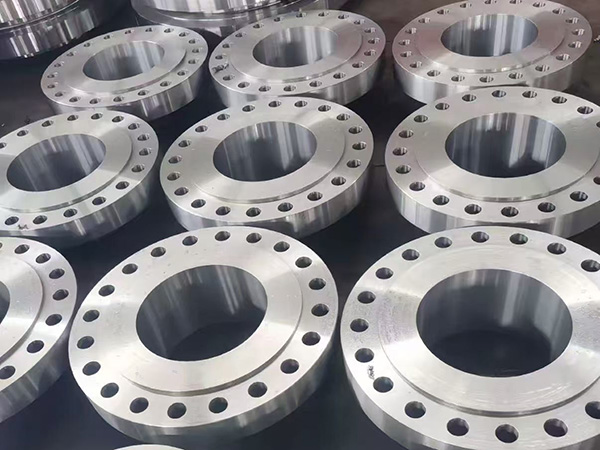
Carbon Steel Flanges for Pipe to Pipe Connections
-
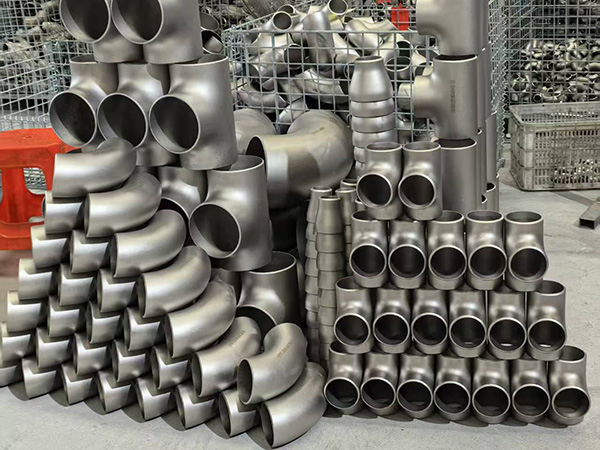
Carbon Steel Elbow in Bulk Supply for Plant Piping
-
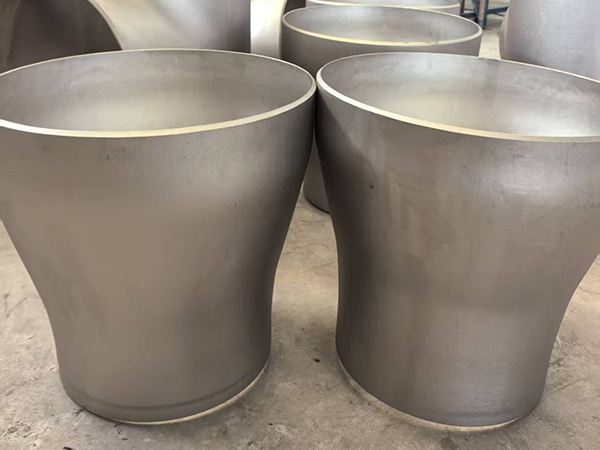
Large Diameter Concentric Reducer for Transmission
-
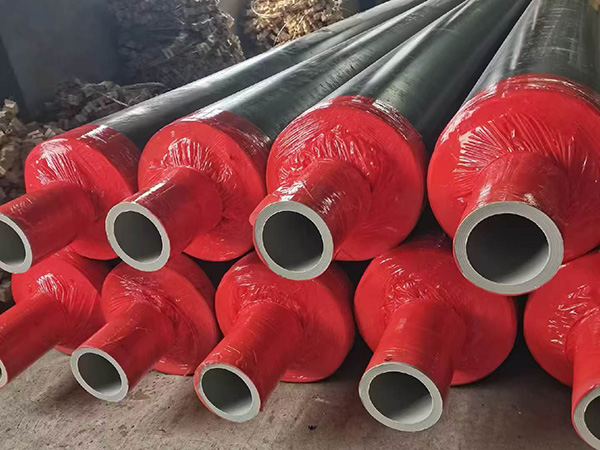
Polyurethane Foam Insulated Pipe with Protected Ends
-
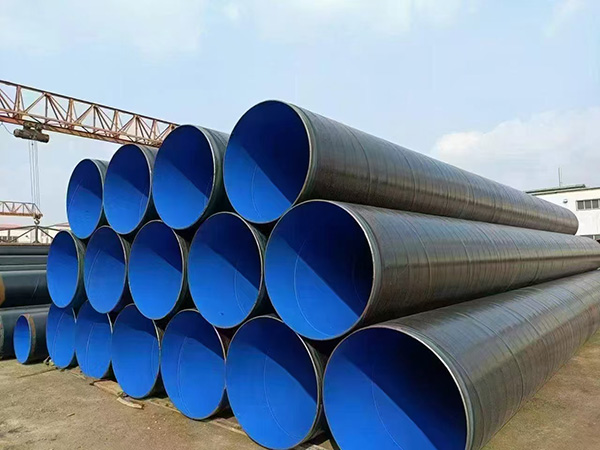
3PE Anti Corrosion Pipe with Internal Epoxy Lining
-
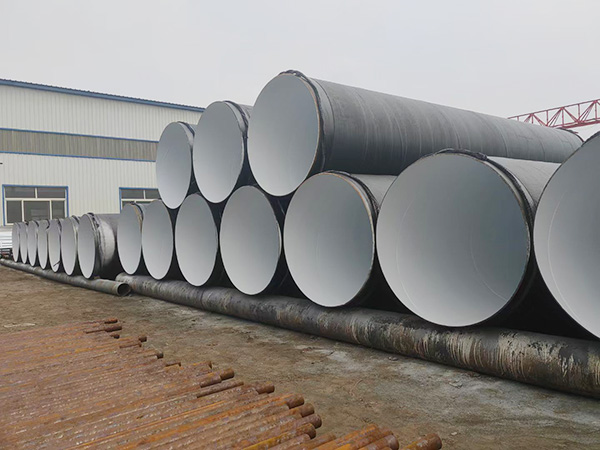
FBE Powder Coated Pipe for Underground Water Mains
Contact us
—— Contact:Manager
—— Tel:+86 18831780999
—— Email:960382820@qq.com
—— Url:https://www.jinyuanpipe.com
—— Address:Yanshan County Economic Development Zone, Cangzhou City, Hebei Province, China