

NewsDetails
Seamless vs Welded Steel Pipe: Selection Guide for Pipeline Projects
author:Jinyuan time:2026-11-07 11:39:19 Click:79
Introduction
The choice between seamless and welded steel pipe affects cost, lead time, dimensional accuracy and the range of sizes available. Seamless pipe has no weld seam and is produced by piercing a solid billet, while welded pipe is formed from coil or plate and joined along one or more seams. Neither type is universally superior; the correct choice depends on diameter, wall thickness, pressure, temperature and the inspection regime the project can support.
This guide compares the main production routes and sets out the conditions under which each is the sensible selection.
How Seamless Pipe Is Made
Seamless pipe begins as a heated solid billet that is pierced to form a thick-walled hollow shell, then rolled and stretched to the final diameter and wall thickness. Because there is no weld, there is no seam to inspect and no heat affected zone along the length of the pipe. The process naturally produces a pipe with good concentricity and uniform properties around the circumference.
The limitation is size. Seamless mills are practical up to roughly 660 mm outside diameter, and the cost per tonne rises sharply as diameter and wall thickness increase, because the starting billet must be large.
How Welded Pipe Is Made
Welded pipe is formed from strip or plate and closed with a longitudinal or helical seam. Electric resistance welding produces small and medium diameter pipe at high speed with a narrow seam. Longitudinal submerged arc welding produces larger diameter pipe from plate, with one straight seam. Spiral submerged arc welding produces large diameter pipe from coil, with a helical seam.
Each route leaves a weld that must be inspected, and each has a characteristic tolerance pattern: ERW pipe is dimensionally consistent, LSAW pipe has excellent roundness at large diameter, and spiral pipe has a seam angle that spreads weld imperfections over a longer path.
Pressure and Temperature Capability
Seamless pipe is often preferred for high pressure, high temperature and cyclic service, largely because there is no weld seam to act as a discontinuity. This preference is traditional as much as technical: a properly inspected LSAW or ERW seam can meet the same pressure rating, and modern line pipe specifications accept welded pipe for gas transmission at high design pressure.
For small diameter high pressure work such as hydraulic lines, instrument tubing and boiler applications, seamless remains the practical default because welded alternatives are not commonly produced in those sizes with the required wall.
Dimensional Accuracy and Ovality
Seamless pipe typically shows better wall concentricity, which matters when the pipe is subsequently machined, threaded or rolled. Welded pipe can show a slight flattening adjacent to the seam and a small diameter variation at the seam location, although sizing mills reduce this to within standard tolerance.
For large diameter transmission lines, roundness at the pipe end is the parameter that decides field fit-up quality. LSAW pipe with end sizing generally gives the most consistent result in this respect.
Cost and Availability
Per tonne, welded pipe is generally less expensive than seamless pipe in the same size and grade, and the gap widens as diameter increases. Welded pipe is also available in longer lengths and in diameters that seamless mills cannot produce. Seamless pipe carries a premium that reflects the more energy-intensive process and the smaller number of mills capable of large sizes.
Availability matters as much as price. A project that needs 1200 mm diameter pipe has no seamless option, and a project that needs 25 mm diameter high pressure tube has limited welded options. Selection should start from what can actually be produced in the required size.
Inspection and Quality Assurance
Seamless pipe requires dimensional, chemical, tensile and hydrostatic testing, and ultrasonic inspection for internal defects. Welded pipe requires all of that plus inspection of the weld seam by ultrasonic or radiographic methods, and often a weld qualification record.
Where the buyer has a capable inspection team, welded pipe delivers excellent value. Where inspection resources are limited and the consequence of a seam defect is high, the seamless option removes one failure mode from the risk register entirely.
Typical Application Mapping
Seamless pipe is common in boiler and heat exchanger tubing, hydraulic and pneumatic lines, high pressure oil and gas gathering, instrumentation, and machined components. ERW pipe is common in water lines, structural applications, low pressure utilities and general conveyance. LSAW pipe is common in large diameter oil and gas transmission and high pressure water mains. Spiral pipe is common in large diameter water transmission, piling, slurry lines and drainage.
Hebei Jinyuan Pipeline Equipment Co., Ltd. supplies seamless, straight seam welded and spiral welded pipe, and can advise on the most economical route for a given diameter, wall thickness and pressure class rather than defaulting to one production method.
Conclusion
The seamless versus welded decision should be driven by size availability, pressure and temperature, inspection capability and budget, in that order. The presence or absence of a seam is a technical fact, but it is only one input into a decision that also involves logistics, code compliance and the practical ability of the project to verify what has been delivered.
References
[1] API Spec 5L: Specification for Line Pipe.
[2] ISO 3183:2019 Petroleum and natural gas industries – Steel pipe for pipeline transportation systems.
[3] ASME B36.10M: Welded and Seamless Wrought Steel Pipe.
[4] ASME B16.5: Pipe Flanges and Flanged Fittings, NPS 1/2 through NPS 24.
[5] ASME B16.9: Factory-Made Wrought Buttwelding Fittings.
[6] ISO 21809-1:2018 External coatings for buried or submerged pipelines – Polyolefin coatings (3PP and 3PE).
[7] EN 10204:2004 Metallic products – Types of inspection documents.
 Recommended Products
-
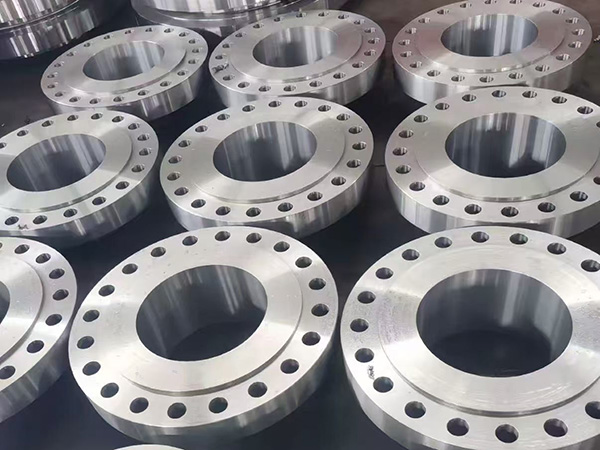
Carbon Steel Flanges for Pipe to Pipe Connections
-
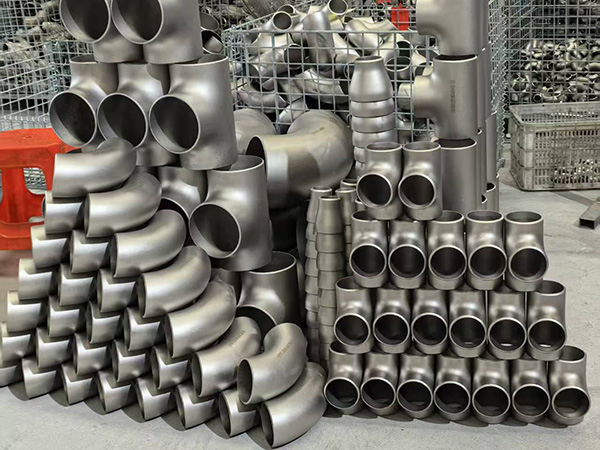
Carbon Steel Elbow in Bulk Supply for Plant Piping
-
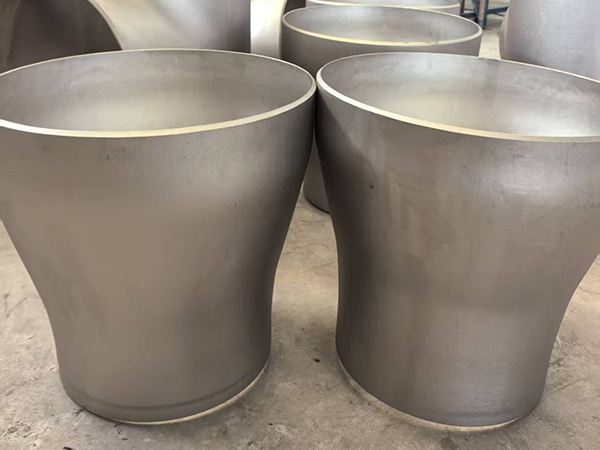
Large Diameter Concentric Reducer for Transmission
-
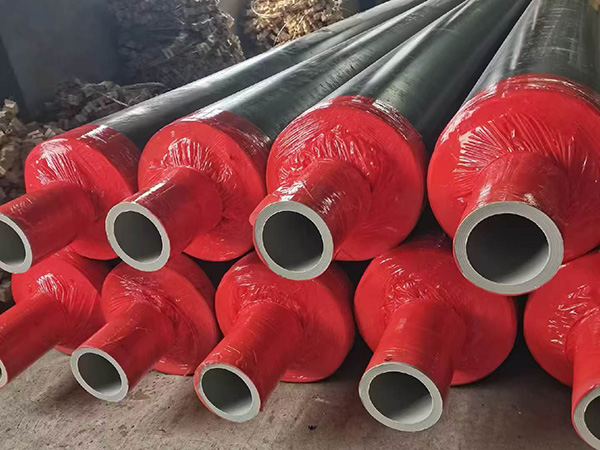
Polyurethane Foam Insulated Pipe with Protected Ends
-
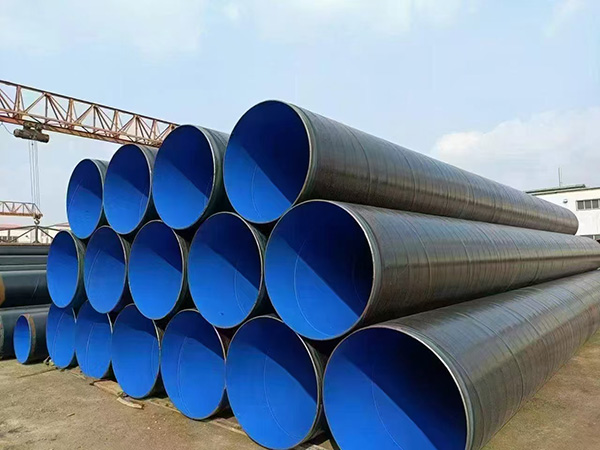
3PE Anti Corrosion Pipe with Internal Epoxy Lining
-
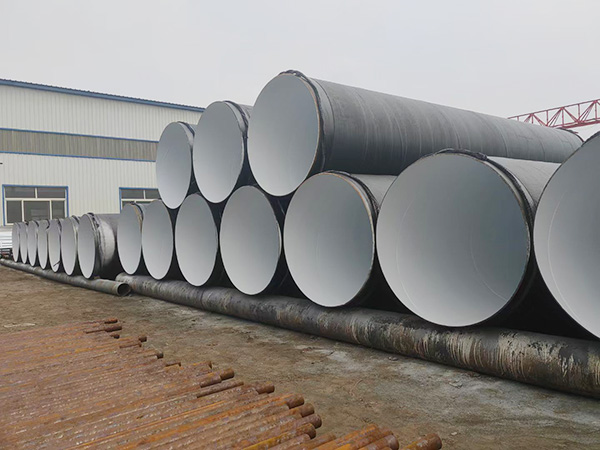
FBE Powder Coated Pipe for Underground Water Mains
Contact us
—— Contact:Manager
—— Tel:+86 18831780999
—— Email:960382820@qq.com
—— Url:https://www.jinyuanpipe.com
—— Address:Yanshan County Economic Development Zone, Cangzhou City, Hebei Province, China