

NewsDetails
API 5L Pipe Grades Explained: From Grade B to X70
author:Jinyuan time:2026-11-07 11:39:09 Click:123
Introduction
Most line pipe in the world is ordered against API Spec 5L, and most technical disagreements about pipe begin with a misunderstanding of what a grade actually guarantees. The grade defines minimum yield strength and tensile strength, but it does not by itself define toughness, weldability, dimensional tolerance or inspection level. Those come from the product specification level and from additional supplementary requirements.
This document explains the grade system, the difference between the two product specification levels, and the practical consequences of choosing one grade over another.
What the Grade Designation Means
A designation such as X52 refers to a minimum specified yield strength of 52,000 psi, approximately 360 MPa. Grade B corresponds to 35,000 psi, approximately 245 MPa. The letter X is conventionally read as "times ten thousand psi", so X42, X52, X60, X65 and X70 correspond to 42,000, 52,000, 60,000, 65,000 and 70,000 psi minimum yield strength.
The grade is a minimum, not a target. Actual yield strength of delivered pipe is normally higher than the minimum, and the standard limits how far above the minimum the actual value may go, because excessive strength can impair weldability and toughness.
PSL1 and PSL2: The Real Dividing Line
API 5L defines two product specification levels. PSL1 is a basic specification intended for general service, with relatively wide tolerances and limited mandatory testing. PSL2 is a more demanding specification that adds mandatory chemical composition limits, tensile testing, notch toughness requirements and more restrictive dimensional tolerances.
For a low pressure water line, PSL1 pipe is often adequate. For gas transmission, sour service, low temperature service or any line where fracture propagation is a design concern, PSL2 is normally required. The price difference reflects the additional testing and the tighter process control, not a different steel in principle.
Chemical Composition and Weldability
Carbon equivalent is the practical measure of weldability. A steel with a high carbon equivalent requires preheating and controlled heat input to avoid hydrogen cracking in the field girth weld. PSL2 grades cap carbon and manganese and restrict the carbon equivalent, which is one reason high grade pipe is not automatically harder to weld than low grade pipe.
For field welding in cold weather, the purchaser should specify the maximum carbon equivalent and, where relevant, a maximum hardness in the heat affected zone. These requirements belong in the purchase order; they are not implied by the grade alone.
Strength, Wall Thickness and Pressure
Higher grade steel allows a thinner wall for the same design pressure, which reduces weight and cost per kilometre. The design calculation is governed by codes such as ASME B31.4 for liquid pipelines and ASME B31.8 for gas pipelines, which combine design pressure, outside diameter, allowable stress and a set of design factors.
Thinner wall is not always the cheaper solution. Reduced wall thickness lowers stiffness and increases sensitivity to handling damage, out-of-roundness and buckle propagation. For large diameter lines, the practical minimum wall is often set by installation and stability rather than by internal pressure.
Toughness and Low Temperature Service
Notch toughness is specified as absorbed energy in a charpy impact test at a stated temperature. Pipe intended for service below zero requires impact testing at or below the service temperature, and PSL2 orders normally include this as a mandatory requirement.
Toughness matters most in gas service, where a running fracture can propagate for kilometres if the steel cannot arrest it. For this reason, gas transmission specifications often add drop weight tear testing and a minimum shear area requirement on top of the charpy values.
Common Grade Selection Scenarios
Water transmission and drainage lines are frequently specified in Grade B or X42, where pressure is moderate and toughness requirements are limited. District heating networks commonly use Grade B or X52 with PSL2 chemistry for weldability in urban conditions. Oil and gas gathering and transmission lines typically use X52, X60 or X65 in PSL2, with impact testing and, for sour service, hardness and chemistry restrictions.
Structural and piling applications may use grades outside the pipeline system entirely, since the governing requirement is stiffness and driveability rather than internal pressure containment.
Documentation and Verification
For PSL2 pipe, the inspection document should be a type 3.1 certificate to EN 10204, issued against the actual test results of the production lot rather than against a generic specification. The certificate should allow the pipe heat number to be traced to chemical composition, tensile results, impact results and the dimensional inspection record.
Buyers should check that the grade on the certificate, the grade marked on the pipe and the grade stated on the commercial documents agree. Discrepancies of this kind are the most common source of dispute at the receiving inspection.
References
[1] API Spec 5L: Specification for Line Pipe.
[2] ISO 3183:2019 Petroleum and natural gas industries – Steel pipe for pipeline transportation systems.
[3] ASME B36.10M: Welded and Seamless Wrought Steel Pipe.
[4] ASME B16.5: Pipe Flanges and Flanged Fittings, NPS 1/2 through NPS 24.
[5] ASME B16.9: Factory-Made Wrought Buttwelding Fittings.
[6] ISO 21809-1:2018 External coatings for buried or submerged pipelines – Polyolefin coatings (3PP and 3PE).
[7] EN 10204:2004 Metallic products – Types of inspection documents.
 Recommended Products
-
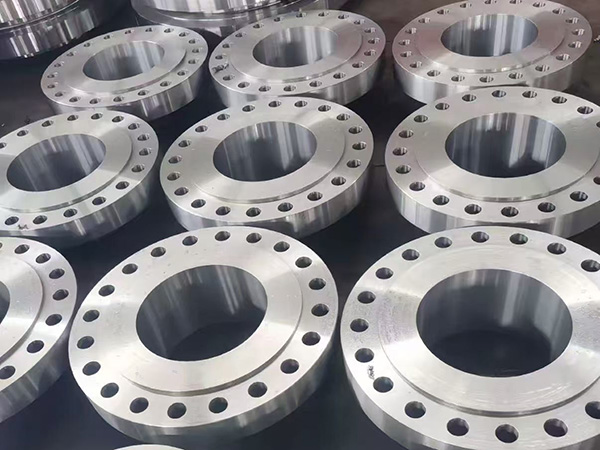
Carbon Steel Flanges for Pipe to Pipe Connections
-
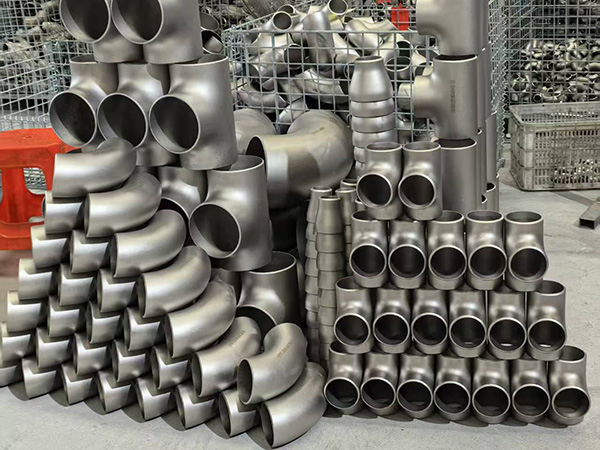
Carbon Steel Elbow in Bulk Supply for Plant Piping
-
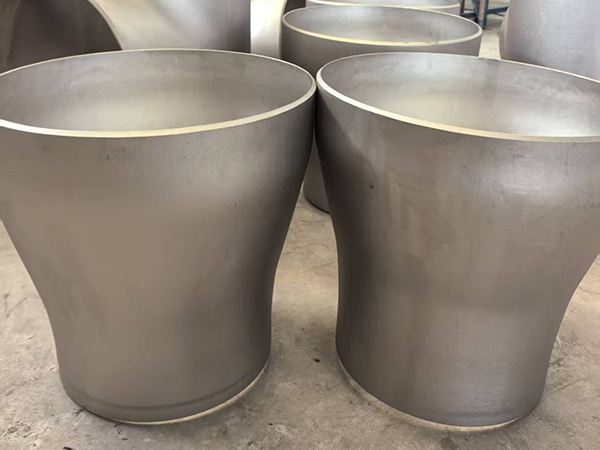
Large Diameter Concentric Reducer for Transmission
-
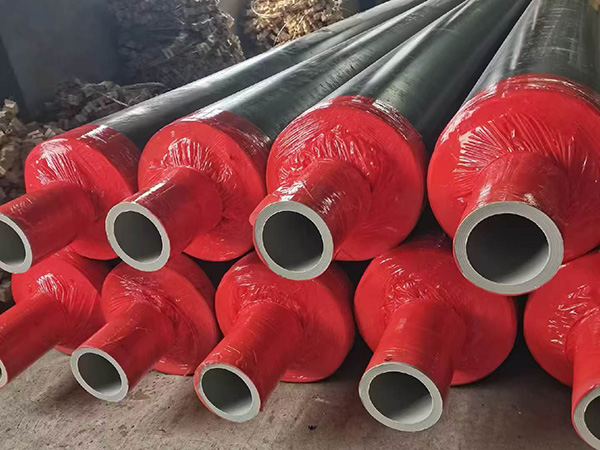
Polyurethane Foam Insulated Pipe with Protected Ends
-
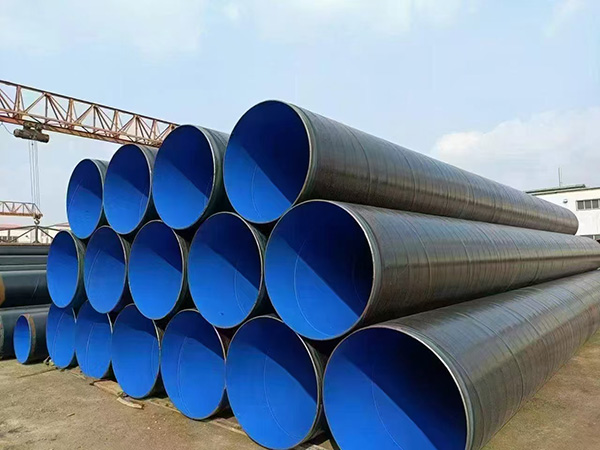
3PE Anti Corrosion Pipe with Internal Epoxy Lining
-
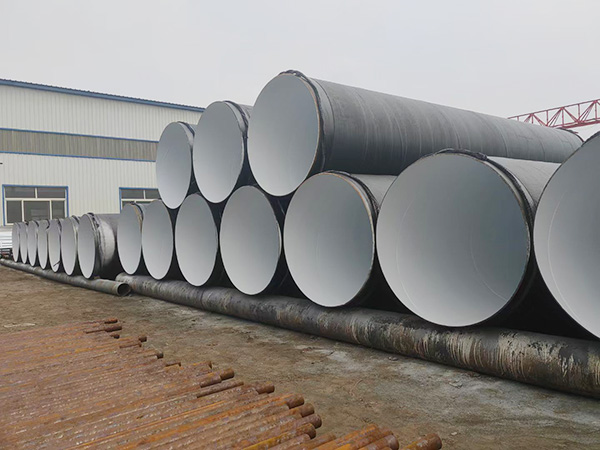
FBE Powder Coated Pipe for Underground Water Mains
Contact us
—— Contact:Manager
—— Tel:+86 18831780999
—— Email:960382820@qq.com
—— Url:https://www.jinyuanpipe.com
—— Address:Yanshan County Economic Development Zone, Cangzhou City, Hebei Province, China